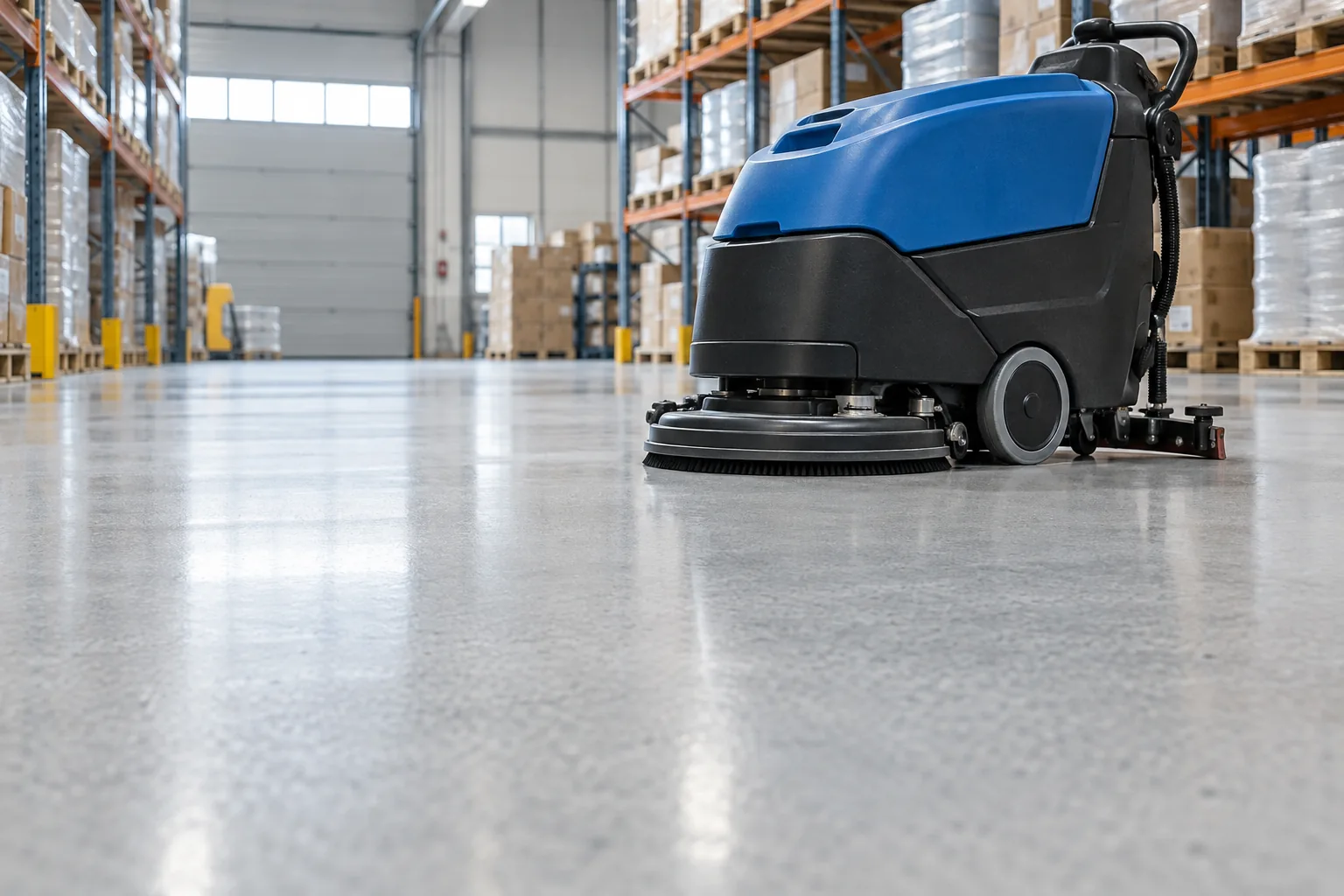
Commercial epoxy flooring is designed for demanding environments, but durable does not mean maintenance-free.
Warehouses, manufacturing facilities, commercial kitchens, processing plants and other high-traffic properties expose flooring to dirt, grease, equipment movement, spills and constant foot traffic.
A sensible cleaning and maintenance programme helps preserve the appearance of an epoxy floor while allowing facility managers to identify wear or damage before it becomes a larger problem.
The good news is that properly installed epoxy flooring is relatively straightforward to maintain.
The key is using the right cleaning methods, dealing with spills quickly and knowing when routine maintenance should be supplemented by professional floor care.
Why Commercial Epoxy Floors Still Need Regular Cleaning
One reason epoxy is widely used in commercial and industrial environments is that the finished surface can be easier to maintain than many traditional flooring systems.
There are fewer places for loose dirt and debris to accumulate, while routine sweeping and mopping can handle much of the day-to-day maintenance.
However, commercial facilities create very different conditions from a residential garage.
A warehouse may have forklifts repeatedly moving across the same traffic lanes throughout the day. Master Grade's warehouse epoxy flooring systems are designed specifically around environments dealing with heavy equipment, pallet traffic and demanding industrial use.
A manufacturing facility may regularly deal with oils, grease, dust or production residue. In these environments, epoxy flooring for manufacturing facilities needs to combine durability with a realistic maintenance programme.
Food and beverage facilities can experience grease, liquids and other spills that need to be removed quickly, while pharmaceutical environments can have significantly stricter housekeeping requirements.
The cleaning programme should therefore match the facility rather than relying on a universal schedule.
Daily Epoxy Floor Maintenance
The simplest way to maintain an epoxy floor is to prevent abrasive material from remaining on its surface.
Loose dirt, dust, sand and debris can be tracked through a facility and repeatedly moved across the coating by footwear, carts, forklifts and other equipment.
For most commercial facilities, routine maintenance should include:
- Sweeping or dust mopping loose debris
- Vacuuming areas where dry contaminants regularly accumulate
- Cleaning spills promptly
- Monitoring heavily travelled aisles and entrances
- Removing dirt around equipment and workstations
- Checking the floor for scratches, chips or damaged areas
High-traffic facilities may need several cleaning cycles during a working day, while lower-traffic environments may require considerably less.
The correct schedule depends on both the amount and type of contamination being introduced to the floor.
How to Mop an Epoxy Floor
Once loose debris has been removed, the floor can normally be wet cleaned using a suitable mop or commercial floor-cleaning system.
Avoid assuming that stronger chemicals automatically produce a cleaner floor.
Aggressive cleaning products may be unnecessary for normal maintenance and may not be suitable for every coating system. Always follow the flooring manufacturer's guidance and use products appropriate for the specific epoxy or urethane system installed.
For routine cleaning:
- Remove loose dirt and debris first.
- Prepare the appropriate cleaning solution.
- Mop or scrub the floor evenly.
- Pay additional attention to traffic lanes and contaminated areas.
- Remove remaining cleaning solution and residue.
- Allow the floor to dry before reopening the area where required.
Larger industrial properties may use automatic scrubbers or commercial floor-care equipment rather than manual mopping.
The principle remains the same: remove abrasive debris first, clean the surface appropriately and avoid leaving dirty cleaning solution or residue behind.
Removing Grease, Oil and Industrial Residue
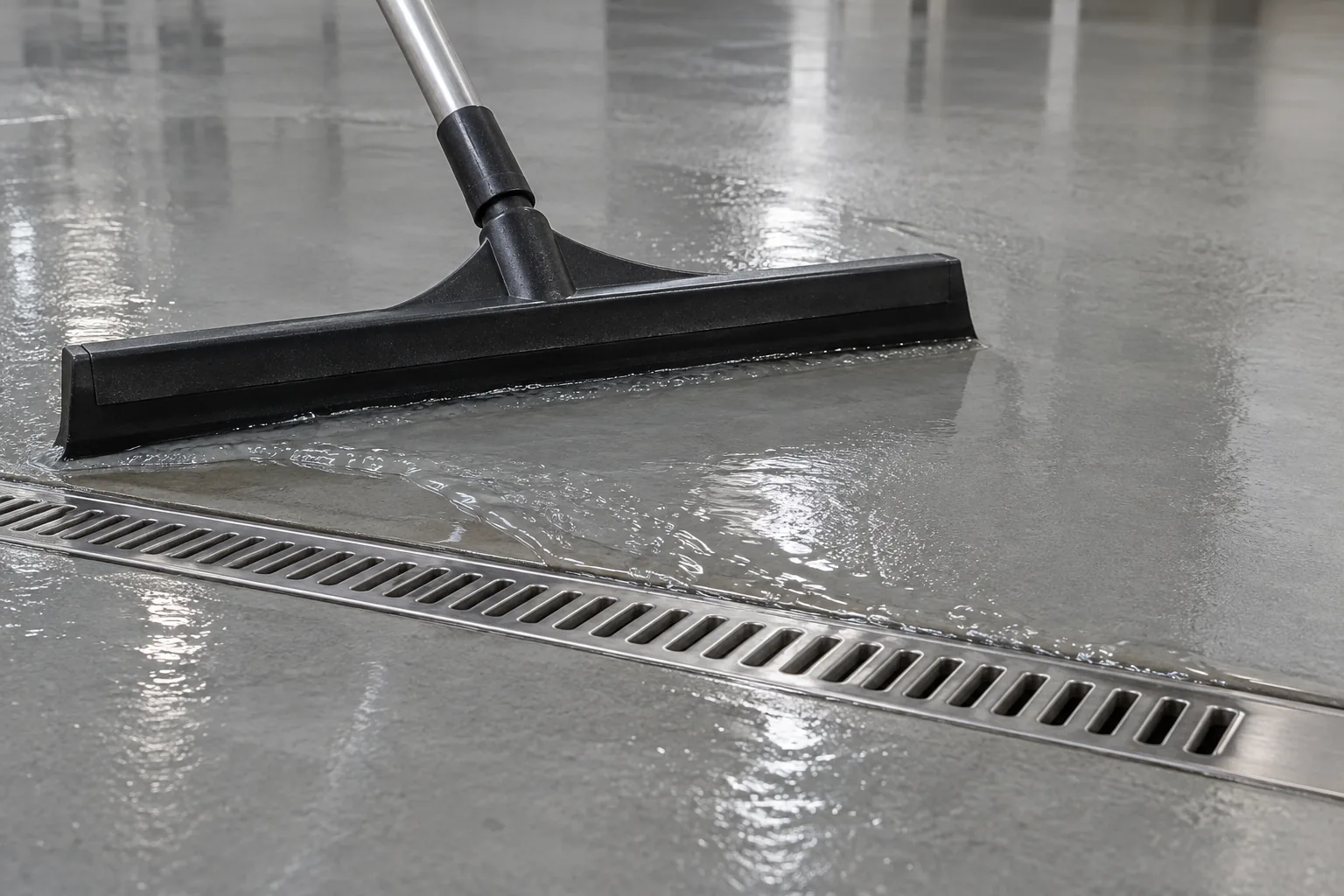
Commercial floors rarely become dirty evenly.
Most facilities develop specific contamination zones.
In warehouses, this could occur around loading areas, machinery or forklift routes.
In manufacturing environments, contamination can develop near production equipment.
Restaurants and food-processing operations may experience recurring grease and food-related spills.
Where oil, grease or another contaminant is present, deal with it as soon as practical instead of repeatedly allowing traffic to spread it across the floor.
Use a cleaning product suitable for both the contaminant and the installed coating system.
Facilities regularly dealing with harsher substances may need flooring designed specifically for that exposure. Master Grade also installs chemical-resistant epoxy flooring for processing facilities where floors may regularly encounter water, oils, grease or chemical spills.
If contamination repeatedly occurs in the same location, the better solution may be operational rather than simply cleaning more frequently.
Drip trays, entrance mats, equipment maintenance or a revised cleaning schedule may reduce the amount of contamination reaching the floor in the first place.
Cleaning Epoxy Floors in Warehouses
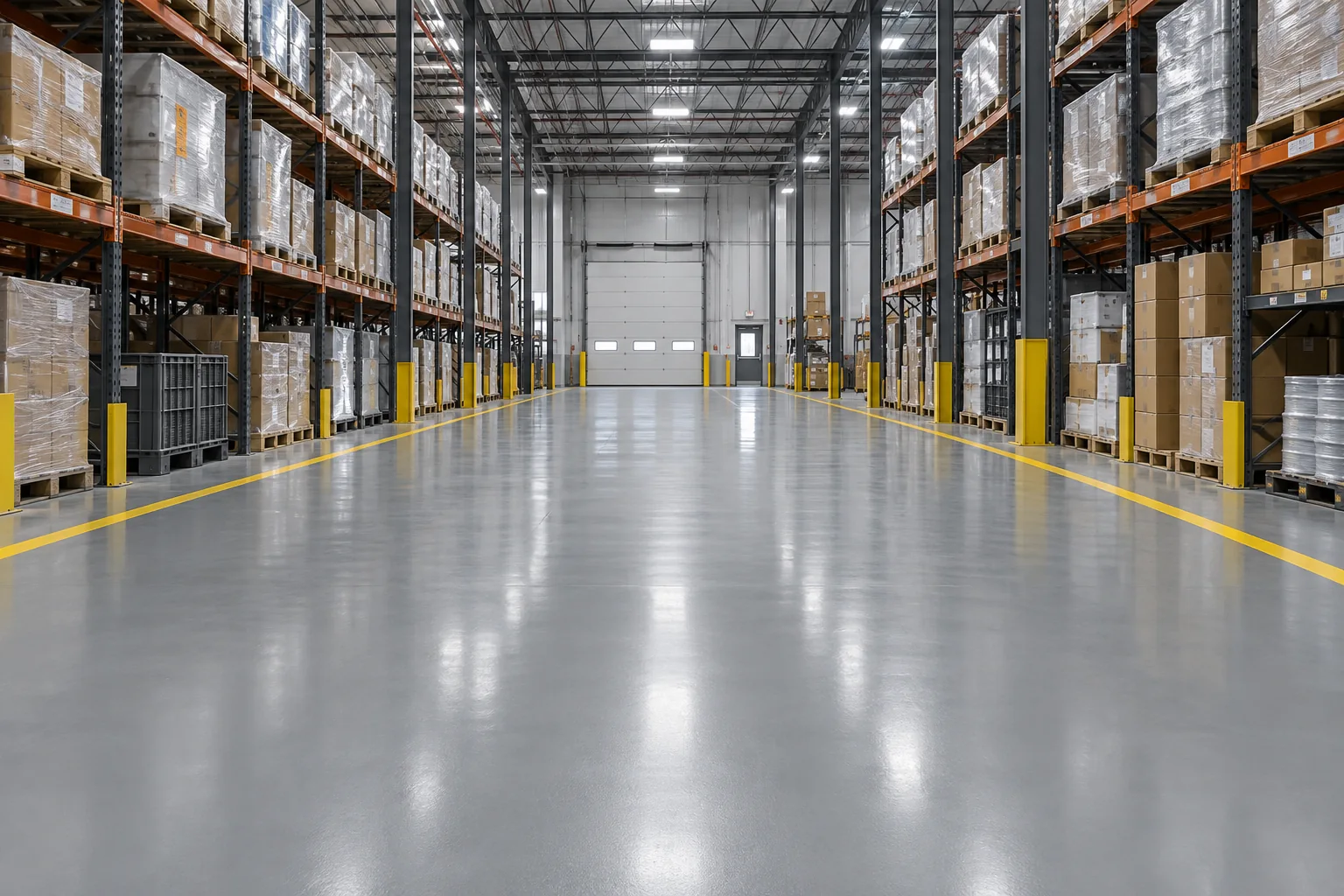
Warehouse flooring needs to cope with pedestrian traffic, forklifts, pallet movement, loading activity and debris introduced from outside.
Rather than treating the entire floor identically, divide the warehouse into maintenance zones.
High-Traffic Zones
Main aisles, loading areas and entrances normally require the most frequent attention.
Dry debris should be removed regularly before wheels and foot traffic repeatedly grind it against the coating.
Equipment Areas
Areas around machinery, charging stations or maintenance zones may experience oils, liquids or other contaminants that require targeted cleaning.
Lower-Traffic Storage Areas
Storage areas receiving less movement may require less frequent wet cleaning, although they should still be inspected and kept free from accumulated debris.
This approach allows facility managers to spend maintenance time where it actually matters instead of applying the same cleaning schedule to every square foot of flooring.
For facilities planning a new surface rather than maintaining an existing one, Master Grade provides dedicated warehouse epoxy floor installation and repair throughout the Greater Toronto Area.
Cleaning Epoxy Floors in Food & Beverage Facilities
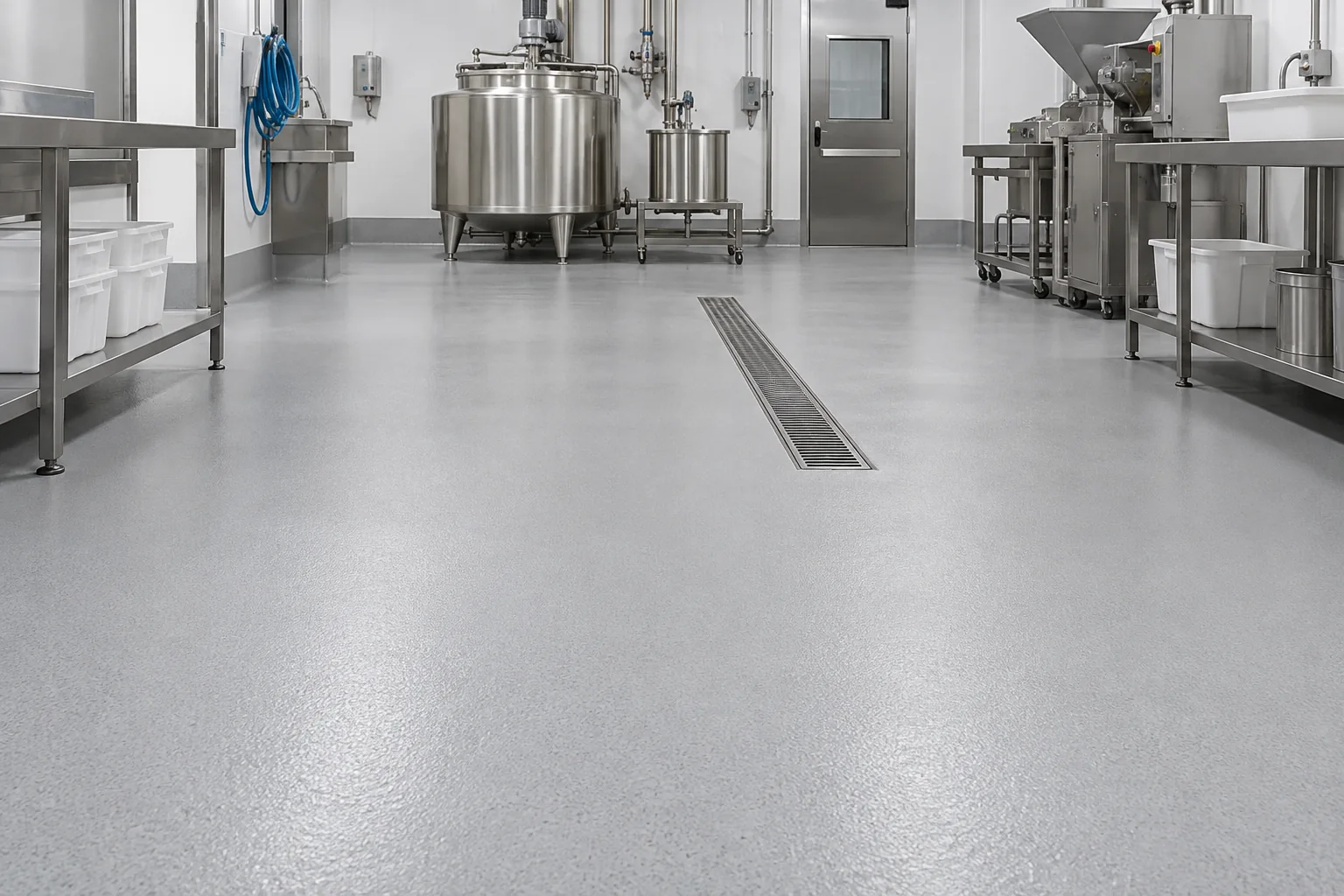
Floor maintenance becomes especially important in food production, commercial kitchens and beverage-processing environments because spills and contamination can occur continually throughout the working day.
A cleaning programme may need to account for:
- Grease and oils
- Food residue
- Liquids and spills
- Heavy equipment
- High foot traffic
- Frequent cleaning cycles
Spills should be dealt with quickly and the cleaning process should follow the facility's own sanitation requirements.
The flooring system itself should also be selected with the operating environment in mind.
A commercial kitchen and a dry-storage warehouse do not necessarily need the same floor specification.
Master Grade's food and beverage epoxy flooring systems are intended for restaurants, processing environments, grocery stores and other commercial food facilities where stain resistance and cleanability are important.
Cleaning Epoxy Floors in Pharmaceutical and Controlled Facilities
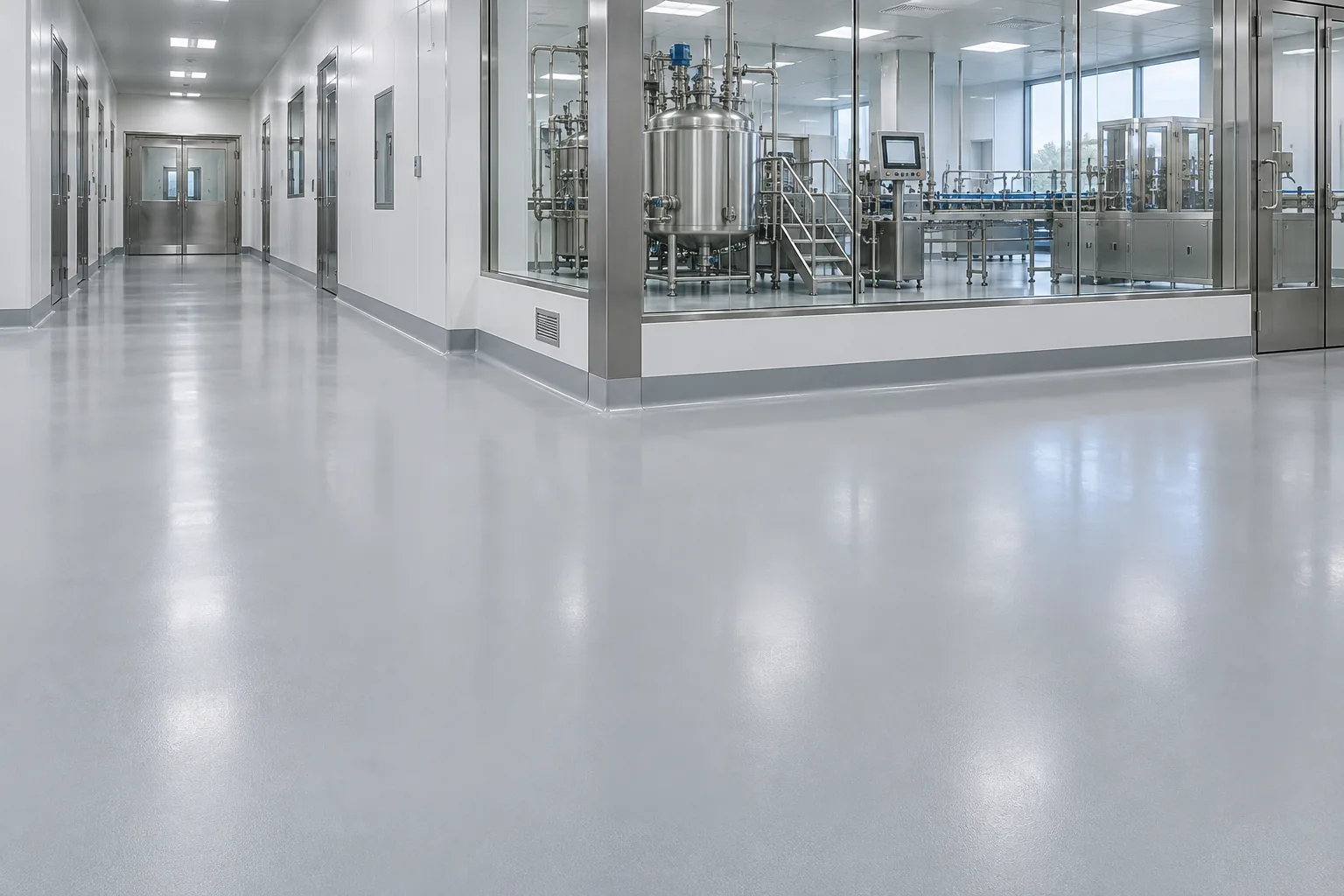
Pharmaceutical, laboratory and other controlled environments can place different demands on flooring.
The question is not simply whether the surface looks clean.
Facility operators may have documented cleaning processes, approved products and internal procedures that need to be followed consistently.
An epoxy floor in these environments should therefore be maintained according to the requirements of the facility and the specifications of the installed flooring system.
Cleaning teams should know which products and equipment are approved rather than changing chemicals or procedures without first checking compatibility.
Master Grade also installs pharmaceutical facility epoxy flooring designed around environments requiring smooth, durable and easy-to-clean floor surfaces.
When Routine Cleaning Is Not Enough
Sweeping and mopping handle day-to-day maintenance, but commercial flooring may periodically require a more intensive clean.
This becomes particularly useful when a facility develops:
- Ground-in dirt
- Grease accumulation
- Heavy traffic marks
- Difficult staining
- Large contaminated areas
- Residue that routine mopping is no longer removing
Facilities without the equipment or staff to handle this internally may bring in a commercial floor-care contractor.
For example, Clean Space provides commercial concrete and epoxy floor cleaning for high-traffic commercial and industrial properties, including deep cleaning, surface scrubbing and epoxy floor coating cleaning.
The important distinction is between cleaning and repair.
Professional cleaning can remove contaminants and improve the appearance of a dirty floor, but it cannot repair a coating that has physically failed.
Signs an Epoxy Floor May Need Repair Instead of Cleaning
Facility managers should periodically inspect the floor while cleaning it.
Look for:
- Chips or localised coating damage
- Cracking in the underlying concrete
- Areas where the coating is separating
- Excessive wear in traffic lanes
- Surface damage around machinery
- Sections that remain visibly damaged after cleaning
These problems should not simply be scrubbed harder.
Small areas of damage may be repairable before they spread, while older or heavily worn floors may eventually require recoating.
Catching problems early can make repairs considerably easier than waiting until a larger section of the flooring has deteriorated.
Cleaning Products to Avoid on Epoxy Flooring
There is no single cleaning chemical recommendation that applies to every epoxy system.
The exact coating chemistry, finish, contaminants and operating environment all matter.
As a general rule, avoid experimenting with unnecessarily aggressive chemicals when a milder approved product will do the job.
Before introducing a new cleaner:
- Check the flooring manufacturer's recommendations
- Confirm compatibility with the coating
- Follow the cleaning product's dilution instructions
- Test appropriately before widespread use where necessary
- Train staff on the approved process
This is particularly important in industrial properties where cleaning teams may have access to strong chemicals intended for completely different materials.
Build a Maintenance Schedule Around the Facility
A warehouse with continuous forklift traffic should not have the same maintenance plan as a lightly used commercial room.
Create the schedule around contamination and traffic.
Daily
Remove loose debris, deal with spills and inspect heavily trafficked areas.
Weekly
Perform appropriate wet cleaning or machine scrubbing based on facility use.
Periodically
Inspect the coating closely, deep clean problem areas and review recurring contamination.
As Needed
Repair damaged areas or assess whether sections of the floor require recoating.
The more demanding the environment, the more important it becomes to document the maintenance process rather than leaving cleaning entirely reactive.
Protecting an Epoxy Flooring Investment
The lifespan and performance of a commercial floor depend on far more than its cleaning schedule.
Concrete preparation, coating specification, installation quality, operating environment and traffic levels all matter.
Maintenance is simply one part of protecting that investment.
A practical approach is to:
- Install the correct flooring system for the environment.
- Keep abrasive debris off the surface.
- Remove spills and contaminants promptly.
- Use appropriate cleaning products and equipment.
- Periodically deep clean heavily used areas.
- Inspect the coating while cleaning.
- Repair damage before it spreads.
Businesses operating across different environments can also review the range of industries served by Master Grade Epoxy to understand how flooring requirements change between warehouses, manufacturing plants, food-processing facilities, chemical-processing environments and pharmaceutical operations.
Need a Commercial or Industrial Epoxy Flooring System?
Master Grade Epoxy is a commercial and industrial epoxy flooring contractor serving businesses throughout the Greater Toronto Area.
From warehouses and manufacturing facilities to food and beverage operations and pharmaceutical environments, the correct flooring system starts with understanding how the space will actually be used.
If you are planning a new epoxy floor, replacing an older coating or dealing with damaged concrete, contact Master Grade Epoxy for an estimate and discuss the requirements of your facility.
Frequently Asked Questions
Are commercial epoxy floors easy to clean?
Epoxy floors are generally straightforward to maintain because routine sweeping and appropriate wet cleaning can remove most everyday dirt and debris. Maintenance requirements increase in facilities dealing with heavy traffic, grease, chemicals or industrial contamination.
Can you use a floor scrubber on epoxy flooring?
Commercial floor-cleaning equipment may be suitable for many epoxy systems, but the equipment, pads, brushes and cleaning products should be appropriate for the specific coating. Follow the flooring manufacturer's maintenance recommendations.
How often should an industrial epoxy floor be cleaned?
There is no universal schedule. A busy warehouse or food-processing facility may require cleaning throughout the day, while lower-traffic areas may need considerably less. Build the schedule around traffic and contamination levels.
Can pressure washing be used on epoxy floors?
That depends on the installed coating, its condition and the environment. Before using high-pressure equipment, confirm that the process is appropriate for the specific flooring system and surrounding facility.
When should an epoxy floor be recoated?
Recoating should be considered when the existing surface has experienced significant wear or deterioration that routine cleaning can no longer address. Localised damage may sometimes be repaired without recoating the entire floor.